A concrete pump moves liquid concrete from a mixer or hopper through pipes or hoses to the exact pour location. Hydraulic pressure drives the system. This helps teams place concrete quickly, accurately and with less manual labour, especially when access is difficult or the pour area is far from the delivery truck.
If you have ever wondered how concrete reaches a back garden, basement, upper floor or large slab without endless wheelbarrow trips, the answer is usually concrete pumping. It is one of the most efficient ways to place concrete on both domestic and commercial projects. It also helps crews pour faster while keeping the mix consistent from start to finish.
In this guide, we explain how concrete pumps work in simple terms, the main parts involved, the different pump types and when pumping is the right choice. If you are planning a project and need practical advice, Elite Concrete can help with concrete pump hire, ready mix concrete and tailored support for your site.
What Is A Concrete Pump?
A concrete pump is a machine that transfers freshly mixed concrete from the delivery point to the exact place where it needs to be poured. Instead of moving concrete by hand in barrows or buckets, the pump pushes it through a pipeline or flexible hose.
This makes it ideal for:
- Hard-To-Reach Areas: Back gardens, narrow driveways, basements and sites with limited access.
- Large Pours: Foundations, floor slabs, retaining walls and commercial concrete works.
- Time-Sensitive Jobs: Projects where concrete needs to be placed quickly before it starts to set.
- Cleaner Placement: Sites where accuracy matters and waste needs to be reduced.
Concrete pumps are often used alongside concrete supply services. They can also be matched with the right mix design for the job.
How Does A Concrete Pump Work?
In simple terms, a hydraulic concrete pump pulls wet concrete into the machine and then pushes it through pipes or hoses under pressure. The operator controls where the concrete goes, either through a placing boom or a delivery hose.
The pumping cycle runs continuously. One part of the system draws concrete in while another pushes it out. This steady movement helps keep the pour flowing smoothly.
- 1Concrete Enters The Hopper
Fresh concrete is tipped from the mixer truck into a funnel-shaped hopper on the pump. An agitator inside keeps the mix moving so it doesn't separate before the cylinders take it in.
- 2Hydraulic Cylinders Draw It In
Two hydraulic pistons alternate — one retracts and pulls concrete from the hopper while the other pushes forward into the delivery line. Valves switch flow between the cylinders so pumping never stops. Think of it as a powerful syringe system where one side fills while the other empties.
- 3Pressure Pushes It Through The Line
Hydraulic pressure forces the concrete through steel pipes, rubber hoses or a folding boom — around buildings, across sites, uphill or into places you can't reach by hand.
- 4The Operator Places It At The Pour
At the outlet, a boom pump uses a robotic arm to position exactly where needed. A line pump's end hose is guided manually. Once discharged, the crew spreads, compacts and finishes.
Main Parts Of A Concrete Pump Explained
Understanding the key parts of a concrete pump makes the process much easier to follow.
Hopper
The hopper is where fresh concrete is loaded before pumping begins. Its main job is to hold enough concrete to maintain a steady feed into the pump. A well-fed hopper helps avoid interruptions and keeps the flow consistent.
Valves And Pistons
Pistons move backwards and forwards to draw in and push out concrete. Valves switch the flow between the cylinders and the delivery line. Together, they create the pumping action that moves concrete from the hopper into the hose.
This is the core mechanism behind how concrete pumps work.
Hydraulic System
The hydraulic system powers the pistons and controls the pump's movement. It provides the force needed to move heavy, wet concrete through the line. Without hydraulic pressure, the pump could not deliver concrete over distance or height.
Pipelines, Hoses And Boom
The pipeline carries concrete from the pump to the pour point. Depending on the setup, this may include rigid steel pipes, flexible end hoses or a folding boom mounted on a truck.
- Steel Pipes: Best for longer runs and durable site setups.
- Rubber Hoses: Useful for flexibility and final placement.
- Boom Arms: Ideal for reaching over obstacles or onto elevated sections.
Types Of Concrete Pump
The best type of concrete pump depends on the job size, access and reach required.
Boom Pumps
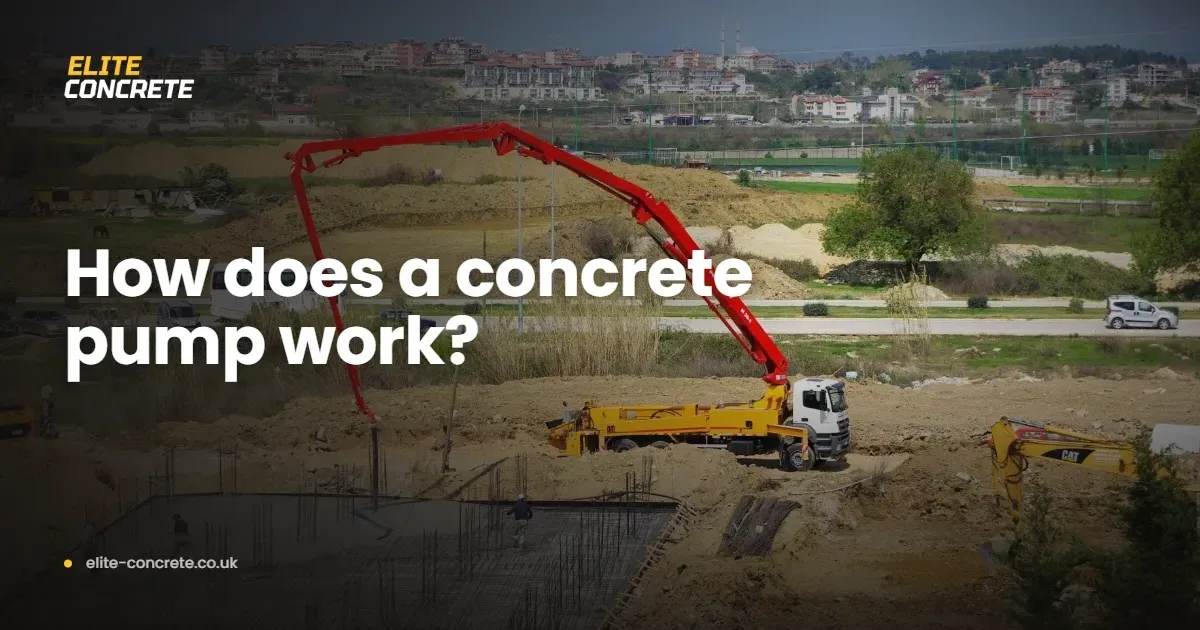
A boom pump is usually mounted on a truck and fitted with a robotic placing arm. The boom unfolds and extends to deliver concrete precisely where it is needed.
Boom pumps are often used for:
- Large Commercial Slabs: Fast and accurate placement over wide areas.
- Multi-Storey Construction: Better reach at height.
- Sites With Obstacles: Useful where concrete needs to pass over structures or restricted ground areas.
Line Pumps
A line pump pushes concrete through a series of pipes and flexible hoses laid along the ground. These pumps are often used for smaller jobs or sites with awkward access.
Line pumps are popular for:
- Domestic Projects: Driveways, patios, garden paths and shed bases.
- Restricted Access Sites: Narrow passages, rear gardens and enclosed spaces.
- Smaller Commercial Jobs: Areas where a full boom setup is unnecessary.
Truck-Mounted And Trailer-Mounted Options
Truck-mounted pumps combine mobility and speed. This makes them suitable for larger pours and quicker setup on bigger projects. Trailer-mounted pumps are towed to site and are often chosen for flexible line pumping arrangements.
If you are unsure which option suits your project, Elite Concrete can advise on the right setup based on access, volume and pour location. You can also request guidance through the contact page or get started with a fast quotation.
When Is A Concrete Pump Used?
Concrete pumping is used when manual pouring would be too slow, too labour-intensive or simply impractical. It is especially helpful when concrete has to travel a long way from the delivery vehicle to the pour point.
Typical uses include:
- House Foundations: Accurate placement into trenches and footings.
- Floor Slabs: Fast pours for garages, extensions and commercial floors.
- Basements: Easier delivery below ground level.
- Driveways And Patios: Cleaner domestic pours with less disruption.
- Hard-To-Reach Garden Projects: Ideal where wheelbarrow access is limited.
- Large Construction Sites: Efficient placement across bigger areas.
For projects that need a tailored mix and accurate on-site delivery, combining pumping with volumetric concrete can be especially useful.
Benefits Of Using A Concrete Pump
Concrete pumping offers clear practical advantages over manual placement.
- Faster Pouring: Concrete reaches the pour area quickly, which helps keep the job on schedule.
- Less Manual Labour: Fewer workers are needed to move concrete across the site.
- Better Access: Concrete can be placed in areas that are difficult to reach by truck or barrow.
- More Accurate Placement: The operator can direct the flow exactly where it is needed.
- Reduced Waste: Cleaner delivery can mean less spillage and less mess.
- Improved Consistency: Large pours can be completed more steadily before the mix starts to stiffen.
It can also help with planning and cost control. Before ordering, using the concrete calculator is a simple way to estimate the quantity required.
What Type Of Concrete Can Be Pumped?
Most pumpable concrete is designed to flow smoothly through the system without blocking the line. In general, the mix needs the right balance of aggregate size, cement, water and admixtures.
Suitable pumped concrete usually has:
- Appropriate Workability: Wet enough to flow, but not so wet that strength or finish is affected.
- Controlled Aggregate Size: Large stones can cause problems if the pipeline is too narrow.
- Consistent Mix Quality: Uniform batching helps the pump run reliably.
According to The Concrete Centre, good concrete performance depends on choosing the right specification for placing and finishing conditions. That is one reason why pump hire and concrete supply should be planned together.
If you are ordering ready mix concrete, it is worth confirming in advance that the mix is suitable for pumping on your site.
Concrete Pumping Safety And Setup Considerations
Concrete pumping is efficient, but it must be planned properly. A safe and successful pour depends on good site access, stable ground, trained operators and the correct setup.
Important considerations include:
- Access Space: The pump and delivery vehicle need enough room to position safely.
- Ground Conditions: Soft or uneven ground can affect stability, especially for larger equipment.
- Pipeline Route: Hoses and pipes should be laid out to reduce strain, sharp bends and trip hazards.
- Communication: The driver, pump operator and site team should coordinate throughout the pour.
- Washout Planning: The site needs a suitable area for safe cleaning after the job.
- Competent Operation: Pump equipment should only be used by trained professionals.
The Health and Safety Executive provides UK guidance on safe construction site practices. Wider concrete and materials guidance is also available from the Construction Products Association.
A simple pre-pour checklist can help:
- Confirm Access: Check gate widths, overhead obstructions and parking position.
- Confirm Volume: Make sure the concrete order matches the planned pour.
- Confirm Reach: Choose a boom pump or line pump based on distance and height.
- Confirm Timing: Ensure labour and finishing tools are ready before concrete arrives.
Concrete Pump FAQs
Can Concrete Be Pumped Uphill?
Yes, concrete can be pumped uphill, provided the pump is suitable for the distance, height and mix design. Hydraulic pressure allows the concrete to travel vertically as well as horizontally, although longer or steeper runs need proper planning.
How Far Can A Concrete Pump Reach?
The reach depends on the type of pump. Boom pumps have a fixed arm reach based on the model, while line pumps can cover long horizontal distances through connected pipes and hoses. The practical limit depends on pump capacity, site conditions and the concrete mix.
Is Concrete Pumping Suitable For Domestic Projects?
Yes, concrete pumping is often an excellent choice for domestic work. It is commonly used for extensions, driveways, patios, garden rooms, garage bases and footings where access is awkward or the pour needs to be completed quickly and neatly.
Many homeowners assume pumping is only for large commercial sites, but line pumps are often used on smaller residential jobs.
Conclusion
So, how does a concrete pump work? It uses hydraulic power, pistons and valves to move wet concrete from a hopper through pipes or hoses directly to the pour area. This makes concrete placement faster, cleaner and far more practical on sites where access, speed or accuracy matter.
Whether you are planning a domestic base or a larger commercial pour, the right pump setup can make a major difference to efficiency and finish. If you need advice on concrete supply, pump hire or the best option for your site, Elite Concrete is ready to help. Explore the blog, request a quote or speak to the team through the contact page.