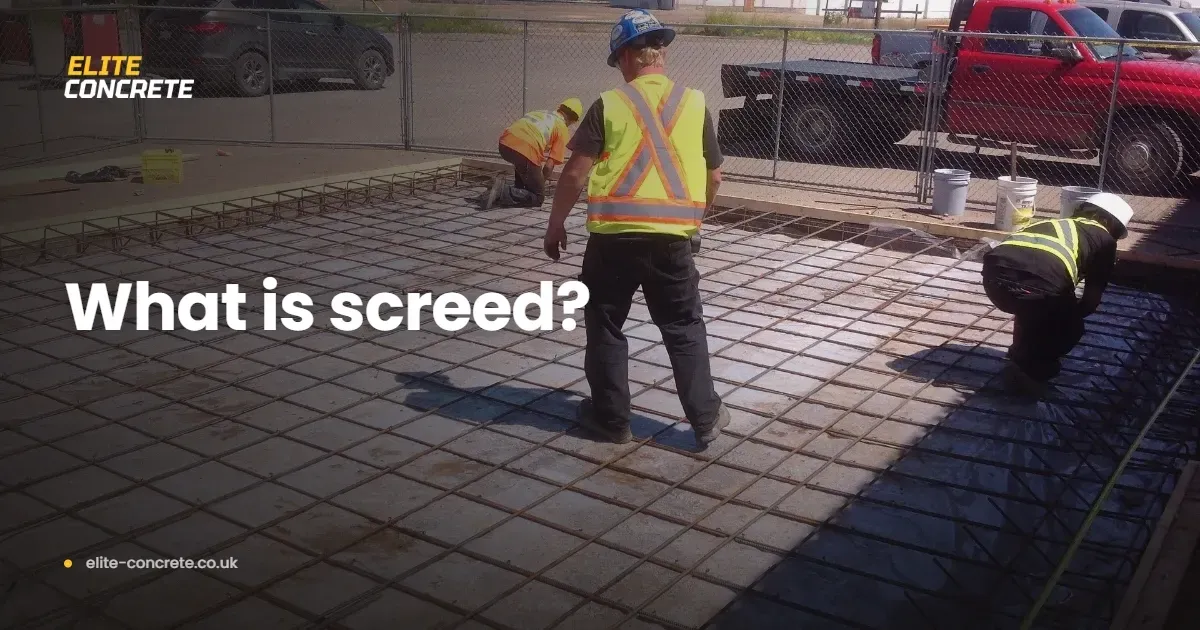
Screed is a thin, smooth layer of cement-based material laid over a concrete subfloor. It creates a level surface for final floor finishes such as tiles, vinyl, carpet or wood. It also improves floor flatness, protects services like underfloor heating, and comes in several types for domestic and commercial use.
If you are planning a renovation, extension or new build, it helps to understand screed early on. People often mention it alongside concrete, but the two do different jobs. Concrete provides structural strength, while screed creates the smooth, even surface needed before the final floor covering is laid.
At Elite Concrete, we support domestic and commercial projects with dependable supply solutions for screed and concrete. If you are comparing options for an upcoming floor installation, explore our screed services or get advice through our contact page.
What Is Screed?
Screed is a carefully mixed material, usually made from cement, sand and water. It can also be supplied as a specialist flowing product. It is laid over a concrete base to create a flat, smooth and stable surface for the finished flooring.
In construction, floor screed is common in homes, extensions, offices, schools, retail units and industrial spaces. Depending on the project, it may be hand applied, pumped into place or designed to dry quickly so other trades can continue sooner.
- Simple Screed Definition: A levelling layer laid over a structural subfloor.
- Main Purpose: To create a smooth surface for final floor finishes.
- Common Location: Above concrete slabs, insulation or underfloor heating systems.
For technical guidance on floor construction and screeds, recognised industry resources such as The Concrete Centre can help explain best practice.
What Is Screed Used For?
Screed prepares floors so they are level, durable and ready for the chosen finish. It is an important part of many flooring systems because small uneven areas in the subfloor can cause bigger problems later. These may include cracked tiles, visible marks in vinyl or movement in timber flooring.
Creating A Level Base For Floor Finishes
One of the main jobs of screed is subfloor levelling. Final floor coverings need a stable and even base to perform well and look right.
- Tiles: Need a flat surface to reduce the risk of lipping or cracking.
- Vinyl: Shows up imperfections easily, so a smooth screed is especially important.
- Carpet: Benefits from an even base for a better fit and finish.
- Engineered Wood Or Laminate: Performs best over a level screed that helps reduce movement and wear.
Covering Underfloor Heating Systems
Screed often covers and protects underfloor heating pipes or cables. It helps keep the system in place and supports even heat distribution across the floor.
This is one reason liquid and flowing screeds are popular in modern homes. They can surround pipes more evenly, which may improve contact and heat transfer. If you are reviewing wider project materials, our concrete services page also explains the base layer beneath the screed.
Improving Floor Durability And Finish Quality
A properly installed screed can improve the quality and lifespan of a floor. It creates a more controlled surface, helps manage minor irregularities in the base and supports a better finish for the final flooring material.
In busy commercial settings, screed can also improve wear resistance and overall performance, depending on the specification and intended use.
What Is Screed Made Of?
Traditional screed is usually made from sharp sand, cement and water. The exact mix can vary depending on the strength, thickness and intended use. Some modern screeds also include additives or fibres to improve performance.
- Sand: Provides body and texture.
- Cement: Acts as the binder that gives the screed strength.
- Water: Activates the mix and allows it to be placed and finished.
- Additives Or Fibres: Can improve drying time, flexibility, crack resistance or flow.
Liquid screed, sometimes called flowing screed, may use a cement-based or anhydrite-based formula. These products flow into place more easily than traditional sand and cement screed.
Types Of Screed
No single screed type suits every project. The right option depends on the floor area, programme, finish requirements, loading and whether underfloor heating is included.
Traditional Sand And Cement Screed
Traditional screed is one of the most common options in UK construction. It is usually mixed from sand and cement, then hand laid, compacted and levelled.
- Best For: Domestic floors, smaller areas and straightforward installations.
- Advantages: Familiar, widely available and suitable for many standard floor builds.
- Things To Consider: It usually needs skilled installation and can take longer to dry fully.
Liquid Or Flowing Screed
Liquid screed is pumped into place and flows naturally to create a highly level surface. It is especially useful for large floor areas or projects with underfloor heating.
- Best For: Large open areas, new builds and underfloor heating systems.
- Advantages: Faster installation, excellent levelling and good coverage around pipes.
- Things To Consider: Surface preparation and moisture testing are still important before final floor finishes are installed.
Fast-Drying Screed
Fast-drying screed suits projects where time matters. It can reduce delays between installation and the next stage of flooring work.
- Best For: Renovations, commercial fit-outs and time-sensitive builds.
- Advantages: Shorter waiting times before floor coverings can be laid.
- Things To Consider: Always follow the manufacturer's guidance for walk-on time and final drying.
Bonded, Unbonded And Floating Screed
These terms describe how the screed is installed within the floor build-up.
- Bonded Screed: Applied directly onto the concrete substrate using a bonding method. This is often used where thinner screed sections are needed.
- Unbonded Screed: Laid over a membrane that separates it from the substrate. This is useful where moisture protection is required.
- Floating Screed: Laid over insulation or underfloor heating rather than directly onto the slab. This is common in energy-efficient homes and modern floor systems.
This simple distinction matters because thickness, drying and performance can all vary depending on whether the screed is bonded, unbonded or floating.
What Is The Difference Between Screed And Concrete?
The main difference between screed and concrete is their purpose, composition and finish.
- Concrete: A structural material used for slabs, foundations and load-bearing elements. It contains larger aggregates and is designed for strength.
- Screed: A smoother finishing layer laid over concrete. It usually contains finer aggregates and is designed for levelling rather than primary structure.
Put simply, concrete forms the base, while screed refines the surface above it.
At a glance, here is how the two compare:
- Main Role: Levelling and finishing.
- Aggregate Size: Finer.
- Finish: Smooth and even.
- Typical Use: Subfloor for final flooring.
- Main Role: Structural support.
- Aggregate Size: Larger.
- Finish: Rougher unless specially finished.
- Typical Use: Slabs, footings and structural elements.
If you are also comparing base materials, see our pages on ready mix concrete and volumetric concrete.
How Thick Should Screed Be?
Screed thickness depends on the type of screed and how it is installed. There is no single thickness that suits every project.
- Bonded Screed: Often laid thinner because it is attached directly to the base.
- Unbonded Screed: Usually needs more depth to perform well over a membrane.
- Floating Screed: Commonly needs greater thickness because it sits over insulation or heating systems.
As a practical rule, the floor build-up should always match the product and application. UK projects should follow the screed manufacturer's guidance and any relevant standards or professional advice. For broader building guidance, RICS provides useful professional context on construction standards and property best practice.
How Long Does Screed Take To Dry?
Screed drying time is one of the most misunderstood parts of floor installation. It helps to separate three different stages.
- Walk-On Time: When the surface is firm enough for light foot traffic.
- Drying Time: When moisture continues to leave the screed over days or weeks.
- Readiness For Floor Finishes: When the screed reaches the moisture level needed for tiles, vinyl, wood or carpet installation.
Traditional sand and cement screed usually dries more slowly than fast-drying or specialist liquid products. Thickness, temperature, ventilation and humidity all affect the process.
For that reason, you should not rely on guesswork. Moisture testing should be carried out before sensitive floor finishes are laid, especially vinyl, timber and other moisture-sensitive materials.
Where building regulations or site safety processes are relevant, GOV.UK can provide official UK guidance on wider construction compliance topics.
Can Screed Be Used With Underfloor Heating?
Yes, screed is widely used with underfloor heating. It is often one of the best ways to protect the system and support heat distribution.
Floating screed systems are common in homes where insulation and underfloor heating are installed together. Liquid screed is especially popular because it can flow around pipes with fewer voids. This helps create a more even floor surface and may improve heat transfer.
- Good Pipe Coverage: Helps protect the heating system.
- Even Heat Distribution: Supports consistent floor temperatures.
- Smooth Surface: Makes it easier to install final floor finishes above.
Before commissioning underfloor heating, allow the screed to cure properly and heat it up gradually in line with product guidance.
When Should You Choose Professional Screed Installation?
Professional screed installation is worth choosing when accuracy, finish quality and programme all matter. Even small errors in level, thickness or drying management can lead to expensive flooring problems later.
You should consider expert support if:
- You Are Installing Underfloor Heating: Proper coverage and depth are essential.
- You Need A High-Quality Finish: This is especially important for tiles, vinyl and engineered wood.
- The Project Is Large Or Time-Sensitive: Pumped or fast-drying systems may be more suitable.
- You Are Unsure Which Screed Type To Use: Professional advice can help avoid delays and rework.
Elite Concrete can help you plan the right material supply for domestic renovations, extensions and commercial flooring projects. You can also use our concrete calculator to estimate material needs, or request a quote for tailored advice.
Frequently Asked Questions About Screed
Is Screed The Same As Self-Levelling Compound?
No. Screed and self-levelling compound are related, but they are not the same. Screed is generally used as a thicker levelling layer, while self-levelling compounds are often thinner finishing products used to correct minor surface irregularities.
Can Screed Be Left As The Final Floor Surface?
In some commercial or design-led settings, a screed-like finish may be used decoratively. However, most screeds are designed to sit beneath the final floor covering rather than act as the finished surface.
Is Screed Suitable For Domestic Homes?
Yes. Screed is commonly used in houses, extensions, kitchen refurbishments and new builds across the UK.
What Flooring Can Go Over Screed?
Tiles, vinyl, carpet, laminate and engineered wood can all be laid over screed, provided the screed is dry enough, level enough and suitable for the chosen flooring system.
Does Screed Crack?
It can crack if it is poorly mixed, laid incorrectly, dries too quickly or is used at the wrong thickness. Correct preparation, joint detailing and curing all help reduce the risk.
How Do I Know Which Screed To Choose?
The best choice depends on the floor area, timescale, subfloor construction, final finish and whether underfloor heating is included. Getting professional advice early can save time and money.
Conclusion
Screed is the smooth, levelling layer that helps turn a structural floor into one that is ready for tiles, vinyl, carpet or timber finishes. It plays an important role in floor quality, underfloor heating performance and long-term durability. Once you understand the difference between screed and concrete, it becomes easier to choose the right type, thickness and drying time for your project.
If you are planning a flooring project and want dependable supply support, Elite Concrete is here to help. Visit our blog for more practical guides, or get in touch to discuss your project requirements.